
The Assemblyman for Living Electoral Area in the West-Mamprusi Municipality in the North East Region, Haruna Ibrahim, has commended the central government and Zoomlion Ghana Limited (ZGL).
…
The Assemblyman for Living Electoral Area in the West-Mamprusi Municipality in the North East Region, Haruna Ibrahim, has commended the central government and Zoomlion Ghana Limited (ZGL).
…
Three new universities have received four vehicles each from government to assist their operational effectiveness.
…
Speaking ahead of the 11th annual African Property Investment (API) Summit Virtual which is taking place online from 30 September – 01 October 2020, Standard Bank’s Head of Real Estate Finance, Africa Regions, Niyi Adeleye, commented that while the Covid-19 pandemic has impacted the sector, those with the necessary capital have continued to seize opportunities.
“Real estate investors that had dry powder (capital) and saw unique opportunities, appeared to have continued to pursue these investments, albeit at a slower pace. On the other hand, investors that depended on external sources of capital appear to have mostly pushed their investment plans out, which is not surprising” said Adeleye.
Having moved online for 2020, the API Summit Virtual, will take place under the theme of Resilience, Opportunity & Innovation (ROI) and will again provide a platform for more than 800 delegates from 32 African and international countries to network, gain new insights and build for the post Covid-19 future.
As one of more than 100 speakers at this year’s online conference and representing one of Africa’s most proactive and largest lenders to the commercial property sector, Adeleye’s views on the investment implications for the sector post Covid-19, will be of key interest to this year’s delegates, said API Events’ Kfir Rusin, the host of the API Summit.
“2020 has been a challenging year for all, and the real estate sector has been hit particularly hard. We are now beginning to see investors and developers explore how they can identify opportunities, as well as building resilience and innovation into their current and future projects,” said Rusin.
He adds that the pandemic has particularly exposed the weaknesses in the retail, hospitality and office sectors, while conversely it has highlighted the defensiveness of logistics and warehousing, corporate residential, as well as the need for data centres, healthcare and affordable housing investments across the continent.
While Adeleye remains cautious on what will be most attractive and provide ROI for investors post Covid-19, it has been observed that the rate of recovery has been faster than anticipated, especially in non-resource dependent economies, he said.
“The pace of recovery appears to have been faster than anticipated in retail, especially for established centres, as customers appear to prefer the use of formal retail environments to less formal ones due to perceptions of better health and safety and this reinforces the growing adoption of many of these assets in key jurisdictions and nodes.” While, also commenting that hospitality assets that “mostly targeted local demand has proven to be slightly more stable than those dependent on external demand,” said Adeleye.
From an emerging sub-sector perspective, Adeleye has noted that the demonstrated resilience, has been seemingly backed by strong occupier demand, he said.
“Currently, segments and emerging segments that are driven by corporate demand, such as offices, logistics and data centres, appear to have demonstrated some resilience. Emerging sectors like healthcare and affordable housing are driven by very wide demand \ supply imbalances and will likely remain resilient going forward.”
However, Adeleye does stress that for African real estate to remain resilient and provide long-term ROI, “All segments must ensure that the rate of supply growth is matched by addressable demand so as to avoid gluts and weaknesses in the property cycles.”
A perspective which Rusin shares, and says it is one of the key themes that has emerged from the more than 35 API Events produced webinars and virtual conferences, which have been watched by tens of thousands of attendees during 2020.
“As we move forward into 2021/22, we believe that this year has also highlighted pre-existing trends such as a slowdown in future retail and office developments; a boost to co-working spaces; renewed interest in affordable housing, diversification into data centres, healthcare and logistics; greater adoption of property technology; more sales and leasebacks, less reliance on international capital, and a race to economic diversification,” said Rusin. Adding that these trends will also help to inform future investment decisions and priorities.
Taking place online, the API Summit Virtual will enable real estate leaders actively developing projects and pursuing investments will be able to engage with decision makers from the safety and comfort of their homes and offices. Attendees can now attend free when registering on the limited access passes.
Credit: APO

Webb Fontaine today announced that Alioune Ciss has been appointed as the new CEO, effective 1st January 2021. He succeeds Didier Reymond who has successfully led the company since 2016.
Alioune Ciss has held the position of Executive Director of Sales and has been instrumental in the company’s growth strategy and management of world leading Customs reform digitalisation projects across the globe with key Governmental partners.
“While stepping away from a company and team that I am passionate about is not an easy decision, one of the key responsibilities of a good leader is to strategically decide the right time for the company and pass the reins to the right person to lead.” said Didier Reymond.
“In his career, Alioune Ciss has built a well-deserved reputation in the Trade and Customs field strategically bringing together new technology and ideas to practically implement and change mindsets. I am confident that he will build successfully on the momentum gained over these past few years and lead, define and execute our next phase of growth.”
Having first joined Webb Fontaine in 2015, Alioune Ciss brings to the role extensive experience at the United Nations Conference on Trade and Development where he had been for the last 10 years.
“I am humbled and excited to be Webb Fontaine’s next Chief Executive Officer, working with some of the best minds in the industry. When Governments are facing significant challenges in a time of disruption, we see opportunity in global Trade – assisted by our products offering real transformation through artificial intelligence. Webb Fontaine has made significant investments in all technologies and we are ready to unleash new value for all; Perfectly positioning us to partner with Governments across the world to modernise their processes and systems.” said Alioune Ciss
As Alioune Ciss moves to CEO, Samy Zayani has been appointed Executive Director of Sales and will support the company on its aggressive growth strategy across the world.
Samy Zayani, who joined Webb Fontaine in 2012, has played a significant role in the company’s growth to date. His experience in marketing coupled with sales, is key to the development and expansion of the brand across new markets and regions; In his role managing the development, commercialisation and deployment of industry leading projects worldwide, including key Reform work with Benin, Guinea and the Cote d’Ivoire Government.
Prior to joining Webb Fontaine, Samy Zayani worked at Procter & Gamble, which enabled him to acquire a solid background in marketing and product strategy.
Pascal Minvielle, Executive Director for Technology and Project Implementation, and Francois Bonvin, Executive Director for Finance, Legal & HR shall remain in their current positions.
Credit: APO

Affordability of devices remains one of the most significant barriers to smartphone adoption in Africa. The average cost of an entry level smartphone in Africa still exceeds 60% of average monthly income, making smartphones largely inaccessible for the majority of the population.
…
The President of the Republic, Nana Addo Dankwa Akufo-Addo, on Monday, September 28, 2020, commissioned the Kasapreko Water, Juice and Soft Drinks Factory, a company operating under Government’s One-District-One-Factory initiative.
…
The President of the Republic, Nana Addo Dankwa Akufo-Addo, on Sunday, inaugurated a $95-million state-of-the-art composting and recycling plant in Kumasi in the Ashanti Region and lauded Jospong Group of Companies for their invaluable service to the nation.
…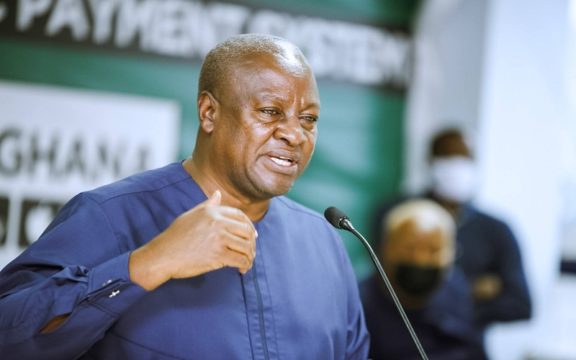
The flag bearer of the opposition National Democratic Congress (NDC), John Dramani Mahama, has sent a note to the Homeland Study Group Foundation (HSGF), cautioning them to back off their plans of claiming parts of Ghana (Volta Region) or risk incurring the wrath of all Ghanaians.
…
The governing New Patriotic Party (NPP) has condemned the disturbing secessionist acts in the Volta Region.
…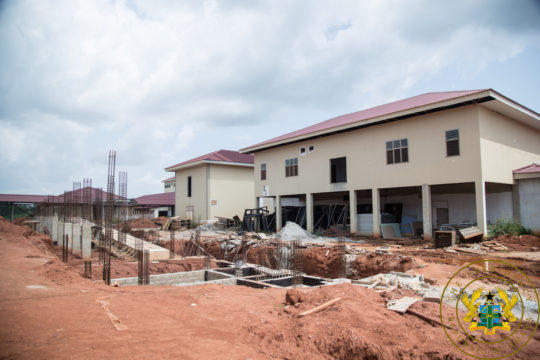
The President of the Republic, Nana Addo Dankwa Akufo-Addo, has inspected ongoing work on the construction of a 500-bed military hospital and work on the construction of Phase II of the Kumasi Airport project.
…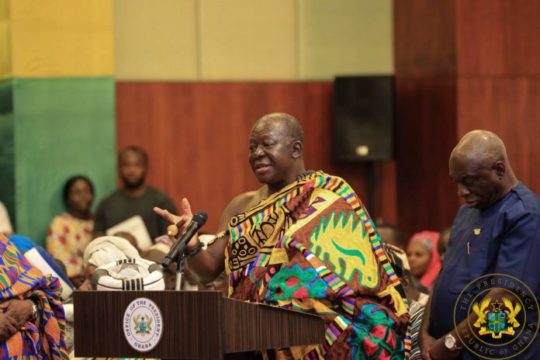
The Asantehene, Otumfuo Osei Tutu II, has assured the President of the Republic, Nana Addo Dankwa Akufo-Addo, that, going into the December 7th Presidential and Parliamentary elections, his record in office “will speak for him”.
…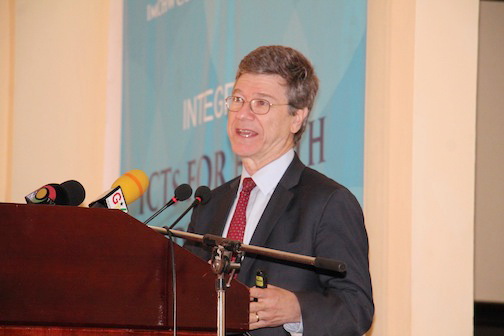
Professor Jeffrey Sachs, the Chairman for the Lancet Commission for COVID- 19 on the roll call for countries that have made strides in the fight against the novel Coronavirus and saved their citizenry from the devastating effects of the pandemic, has indicated that Ghana, under the leadership of its President, Nana Addo Dankwa Addo’s has been quite exceptional.
…