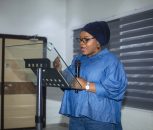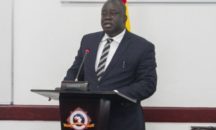
The National Security Coordinator, COP Osman Abdul-Razak, has described the press as the most effective protector of the national purse, saying exposure of corruption by journalists saves the state more than any prosecution.
He said a free and responsible press is not a threat to national security but an instrument of it.
“When the press exposes corruption, it protects the public purse more than any prosecution. When it holds power accountable, it gives a lawful outlet to frustration that would otherwise reduce to violence and reduce recruitment and propaganda of extremists,” COP Abdul-Razak said.
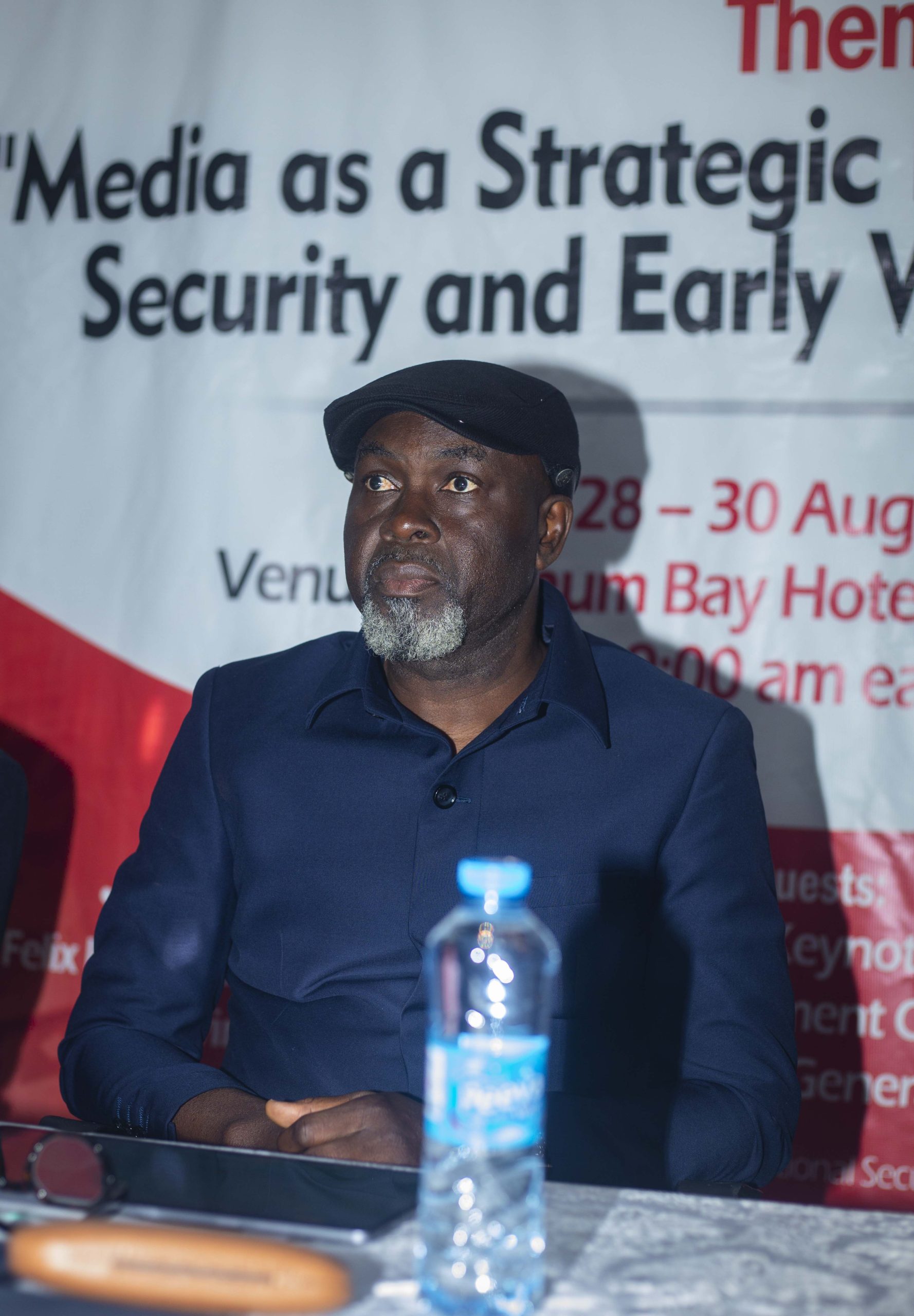
The National Security Coordinator was speaking at a two-day capacity building workshop on Responsive National Security Reporting for members of the Private Newspapers and Online News Publishers Association of Ghana (PRINPAG) in Accra.
The workshop which was held from August 28 to 30, 2026, was under the theme “Media as a Strategic Partner in Preventive Security and Early Warning in Ghana”. It brought together newspaper publishers, editors, and media owners to examine the role of the media in addressing emerging security threats and strengthening information integrity.
Participants were taken through presentations on Ghana’s National Security Architecture, which highlighted emerging and asymmetric security threats, communal conflicts, and conflict-sensitive journalism.
Other presentations covered the Security and Intelligence Agencies Act, 2026 (Act 1168), and Media, National Security, and Strategic Communication, which focused on information management during security incidents and how to avoid operational compromise and panic.
They were further taken through topics on cybercrime, digital threats, and information warfare, where they explored trends in cybercrime and online manipulation, as well as media responsibilities in the digital security space.
The final session dealt with ethics, national interest, and press freedom, with emphasis on balancing constitutional freedoms with security imperatives, using case studies from Ghana and other jurisdictions.
COP Abdul-Razak told the gathering that that the information space is as much a part of the nation’s security perimeter as the borders, the sea and physical offices and urged the National Security to concern itself with responsible media reporting as the press plays a security role in the affairs of the west African nation.
“When the press reports truthfully in moments of tension, it becomes the nation’s steady hand,” he added, crediting Ghana’s democratic resilience in a region plagued by coups in part to the media.
“If Ghana’s democracy remains outstanding in a region of coups, it is in no small measure because at decisive moments the press has chosen responsibility,” he noted.