
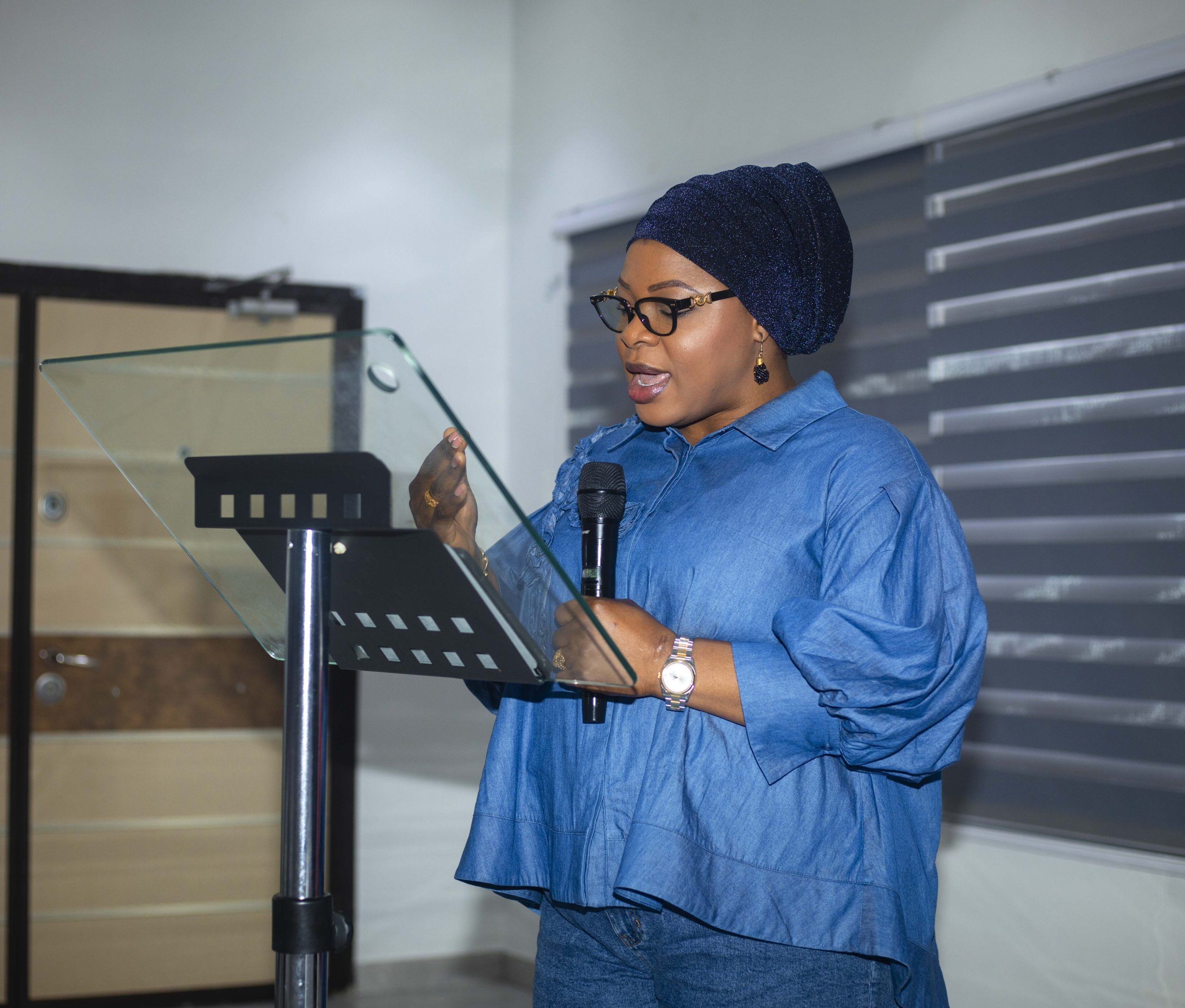
Deputy Government Spokesperson, Shamima Muslim, has called for the survival and transformation of Ghana’s print media industry, describing it as an indispensable pillar of democracy, national memory and preventive security in an era increasingly dominated by social media, misinformation and artificial intelligence-generated disinformation.
Speaking at a two-day residential capacity-building workshop for members of the Private Newspapers and Online News Publishers Association of Ghana (PRINPAG), held from August 28 to 30, 2026, Muslim urged media practitioners to embrace responsible security reporting and position themselves as strategic partners in safeguarding national peace and stability.
The workshop, organized under the theme “Media as a Strategic Partner in Preventive Security and Early Warning in Ghana,” brought together newspaper publishers, editors and media owners to examine the role of the media in addressing emerging security threats and strengthening information integrity.
Participants were taken through presentations on Ghana’s National Security Architecture, which highlighted emerging and asymmetric security threats, communal conflicts, and conflict-sensitive journalism.
Other presentations covered the Security and Intelligence Agencies Act, 2026 (Act 1168), and Media, National Security, and Strategic Communication, which focused on information management during security incidents and how to avoid operational compromise and panic.
They were further taken through topics on cybercrime, digital threats, and information warfare, where they explored trends in cybercrime and online manipulation, as well as media responsibilities in the digital security space.
The final session dealt with ethics, national interest, and press freedom, with emphasis on balancing constitutional freedoms with security imperatives, using case studies from Ghana and other jurisdictions.
Print journalism plays a significant role
According to Muslim, Ghana faces a complex security environment shaped by political instability in parts of the Sahel, the spread of violent extremism, internal vulnerabilities and the rapid circulation of misinformation online. She said these challenges underscored the need for strong, credible and professional journalism.
Reflecting on Ghana’s history, she noted that print journalism played a significant role in the country’s democratic development, citing its contributions to public education during the return to constitutional rule, the campaign for the Right to Information Act, peace journalism initiatives, anti-corruption investigations and national public health campaigns.
“Whenever we have suppressed our individualistic tendencies, that collaboration has pushed forward the frontiers of our democracy,” she said, adding that the partnership between politics and journalism had helped protect the national interest at critical moments in Ghana’s history.
Declining fortunes of print media
Muslim, however, expressed concern about the declining fortunes of the print media industry, warning that the sector was facing significant financial and operational challenges. She pointed to falling newspaper circulation, declining advertising revenue, increasing newsprint costs and growing competition from digital platforms.
She observed that social media platforms now dominate attention and advertising spending, while professional journalists are increasingly being forced to compete with unverified content and rumors. This, she said, has created a credibility challenge for media organizations, some of which have resorted to sensationalism in an attempt to remain relevant.
Print media irreplaceable
Despite these challenges, Muslim stressed that print media remained irreplaceable.
“Print must not die,” she declared. “Radio is fast. TV is dramatic. Online is viral. Print is record. Print is what we cite in court, in Hansard and in history books.”
She argued that while social media often provides immediate information, it frequently lacks context and verification, making professional journalism crucial in helping the public distinguish fact from misinformation. In the age of deepfakes and disinformation, she said, credible media institutions must serve as trusted sources of verification and contextual reporting.
Irresponsible reporting undermines public confidence
The Deputy Government Spokesperson warned that irresponsible reporting on security issues could worsen tensions and undermine public confidence. She cited vigilantism, chieftaincy disputes, ethnic conflicts and religious tensions as examples of issues that required careful and responsible reporting.
She noted that sensational headlines and unverified reports could inflame already fragile situations, while inaccurate information had the potential to deepen divisions and threaten social cohesion.
Muslim urged journalists to adhere to the highest ethical standards when reporting on security-related matters, emphasizing that the pursuit of speed should never come at the expense of accuracy. “Let TikTok be first. Let PRINPAG be right,” she said, encouraging journalists to verify information, protect ongoing security operations and avoid content that could heighten ethnic or religious tensions.
Future of print should be built on trust-based knowledge
She further described information integrity as a national imperative, saying sustainable development could not be achieved in an environment where falsehood and disinformation were allowed to flourish. She called on government, the media, security institutions and citizens to play their respective roles in protecting peace, strengthening democratic institutions and promoting responsible public discourse.
Outlining a path forward for the industry, Ms Muslim said the future of print media should be built on trust-based knowledge rather than paper alone. She encouraged media organizations to diversify through digital products, specialized newsletters, archives and public policy forums, while leveraging their credibility to provide in-depth analysis and verified information.
Establishment of a verification channel
To strengthen cooperation between government, security agencies and the media, she proposed the establishment of a secure verification channel between PRINPAG, the National Security Secretariat and the Ministry of Government Communications. She also called for regular security briefings for editors, expanded safety and Right to Information training, and the development of a PRINPAG Code for Responsible Security Reporting.
She urged journalists to see themselves not only as providers of information but also as protectors of peace, democracy and human life.
“Our collective duty is to communicate accurately, to act responsibly, to defend constitutional freedoms and to place the peace and security of Ghana above every competing interest,” she said.