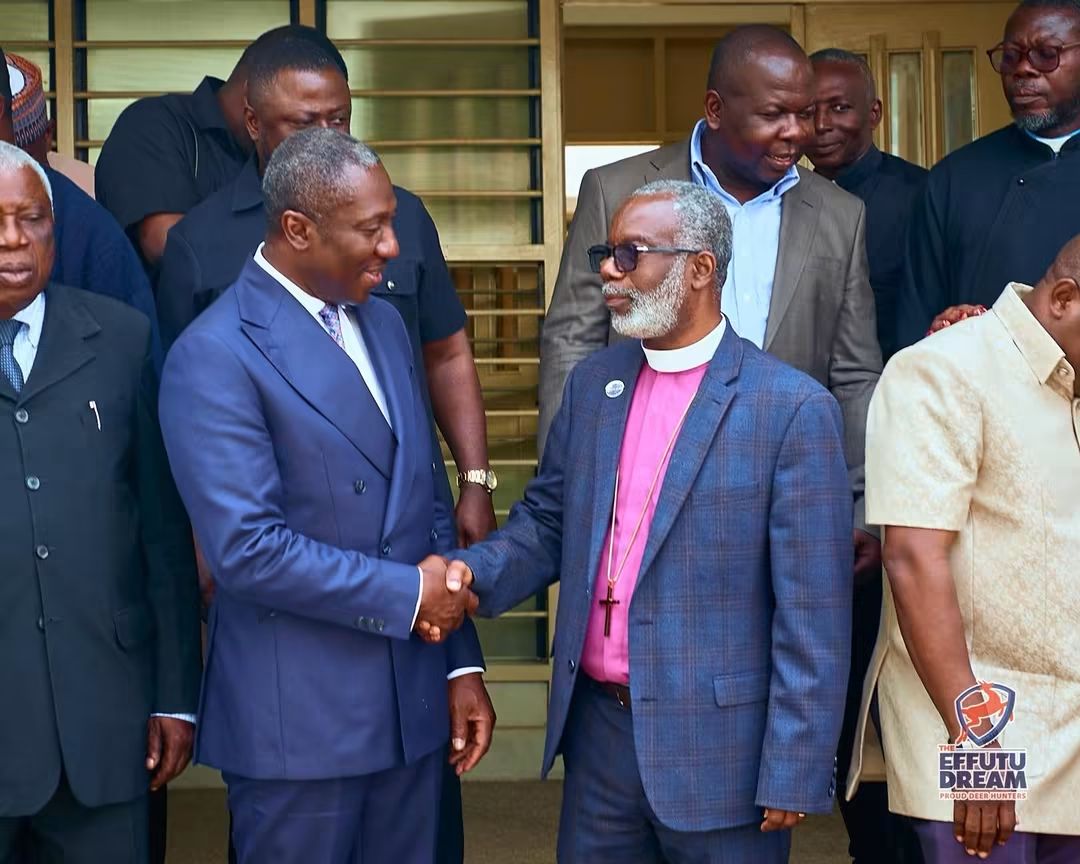
The Minority Caucus in Parliament has called on the Christian Council of Ghana to leverage its moral authority as a national voice to confront what it describes as growing governance failures, rising illegal mining activities, concerns over free speech and losses associated with the operations of the Ghana Gold Board (GoldBod).
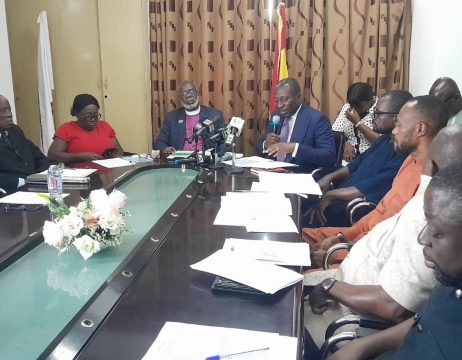
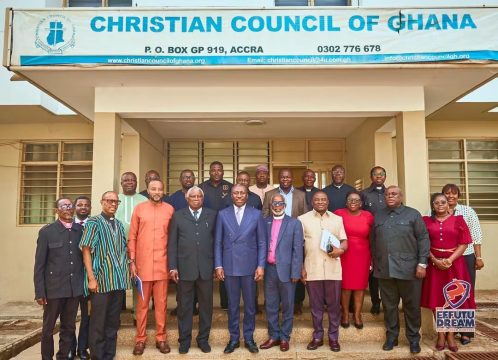
The appeal was made when the Minority leadership met officials of the Christian Council at the Council’s headquarters in Accra following an invitation by the religious body to discuss a number of national issues.
Addressing the meeting, the Minority Leader, Hon. Alexander Afenyo-Markin urged the Christian Council to play a more active role in holding the government accountable and speaking out on matters that threaten Ghana’s democratic and socio-economic development.
“We have come here in good faith and in response to your invitation. Our purpose is not obstruction. Our duty is to scrutinize government and provide oversight in the interest of the Ghanaian people,” he said.
The Minority Leader said institutions such as the Christian Council command enormous respect and credibility among Ghanaians and must therefore become a leading voice in mobilizing national action against what he termed policy failures and governance excesses.
He argued that the issues being raised by the Minority were not partisan concerns but matters affecting the future of the country.
According to him, the Council’s intervention would help elevate public discourse and ensure that critical national challenges receive the necessary attention from policymakers.
A major focus of the engagement was the Minority’s concerns over losses linked to the domestic gold purchase programme. Hon. Afenyo-Markin maintained that the caucus was merely amplifying concerns already highlighted by the International Monetary Fund (IMF), which pointed to significant losses arising from the implementation of the programme.
He stated that while the Minority supports the concept of a domestic gold purchase programme, it is worried about what it considers weaknesses in the policy’s implementation framework.
The Minority Leader cited reports indicating that losses associated with the programme had grown to approximately GH¢22 billion, stressing that such losses were unacceptable at a time when government continued to cite fiscal constraints as a reason for delaying the posting of nurses and teachers and slowing critical development projects.
“If implementation mechanisms are not strengthened, the country will continue to incur huge losses,” he warned.
He further disclosed that the Minority intends to pursue a parliamentary motion seeking a public hearing into the matter.
The caucus also appealed to the Christian Council to join calls for a thorough national conversation on the growing threat of narcotics trafficking.
Hon. Afenyo-Markin expressed disappointment over Parliament’s inability to debate a motion filed by the Minority on recent drug-related incidents, insisting that the issue poses a serious threat to Ghana’s international reputation and national security.
He said concerns first raised by Assin South MP Rev. John Ntim Fordjour deserved careful examination instead of intimidation.
On illegal mining, the Minority warned that the situation has reached alarming levels and requires urgent intervention from all stakeholders, including faith-based organizations.

Hon. Afenyo-Markin said organized labour, environmental groups and communities continue to raise concerns about the devastating impact of galamsey on water bodies and forest reserves.
He questioned whether GoldBod’s operational framework sufficiently distinguishes legally mined gold from illegally sourced gold, arguing that existing arrangements may inadvertently encourage illegal mining.
“If care is not taken, we may not have clean water to drink, and important ecological assets such as the Atiwa Forest could be permanently destroyed,” he cautioned.
The Minority also urged the Christian Council to speak against what it described as attempts to use state institutions to intimidate critics and political opponents.
According to the Minority Leader, recent arrests and investigations involving critics of government risk undermining public confidence in Ghana’s democratic credentials.
He argued that the repeal of the criminal libel law was intended to deepen democratic freedoms and that disputes arising from public commentary should largely be resolved through civil legal processes.
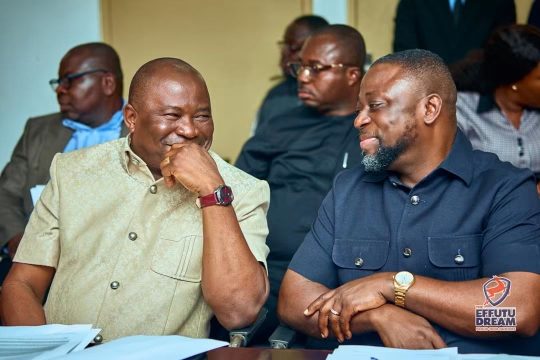
While criticizing government policies, the Minority Leader stressed that the caucus remained committed to national development and constructive engagement.
“We want Ghana to progress. We want our people to get jobs. We want government to focus on its core mandate so that Ghana continues to be a beacon of democracy and development in West Africa,” he said.
He also lamented what he described as the abandonment of several projects initiated under the Akufo-Addo administration, including aspects of the One District, One Factory programme.
Responding on behalf of the Christian Council Chairman, Bishop Kwame Lawson Adjei, a former Vice-Chairman of the Council, commended the Minority for engaging the Council and reaffirmed the importance of opposition in promoting accountability.
He noted that while opposition must remain strong and courageous, it should also be constructive and guided by patriotism.
“Ghana is bigger than any political party, government, opposition or individual ambition,” he said.
Bishop Adjei assured the Minority that concerns relating to GoldBod losses, illegal mining, narcotics trafficking and free speech would be presented to the Executive Council of the Christian Council for discussion and consideration.

He indicated that the Council would determine appropriate interventions, including public advocacy where necessary and quiet diplomacy where it believes engagement behind closed doors would be more effective.